


When designing a custom home, it can be tempting to start with the details. Kitchens, finishes, and Pinterest-worthy features often steal the spotlight early in the process. But the most successful homes don’t begin that way. They start with architecture and interiors being considered together.
Designing together means shaping the architecture and floor plan at the same time, allowing exterior architecture and interior design to inform one another from the very beginning. This approach creates homes that feel cohesive, intentional, and grounded, rather than a collection of beautiful spaces that don’t quite belong together.
Architecture Sets the Tone
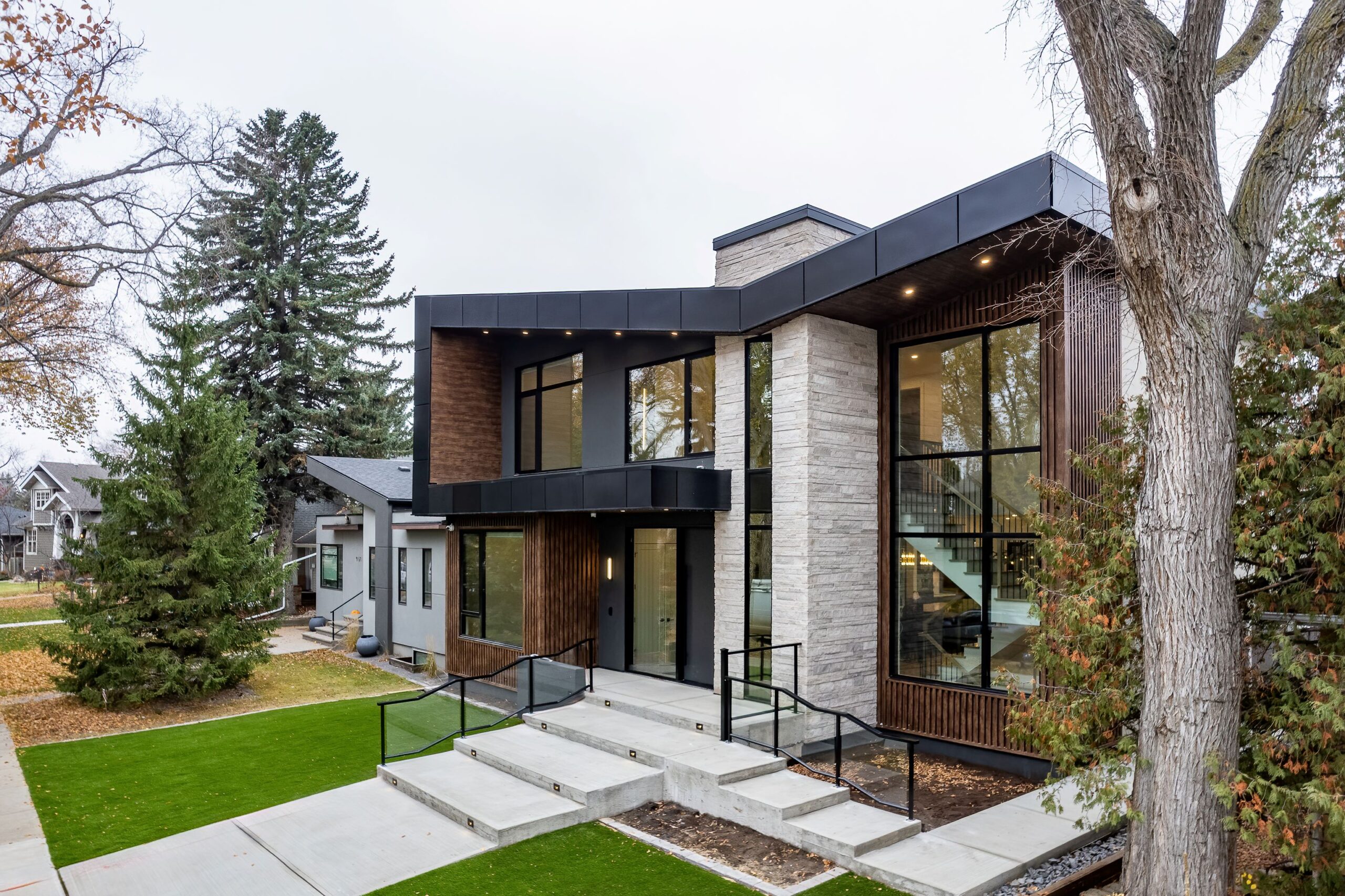
The exterior of a home establishes its identity. Rooflines, window placement, materials, and scale communicate whether a home is modern, transitional, or inspired by classic mountain or European forms. These elements are not purely aesthetic. They influence ceiling heights, natural light, structural spans, and spatial rhythm inside the home.
When architecture and interiors lead together, interior spaces inherit proportion and purpose while still supporting how the home needs to function from the inside out. Tall windows invite light deep into the floor plan. Rooflines inform volume and ceiling detail. Exterior symmetry or asymmetry shapes how rooms relate to one another. The result is an interior that feels like a natural extension of the architecture, not an afterthought layered on top.
Where Architecture and Interiors Meet
The most refined homes are the result of close collaboration between residential designers and interior designers from the very beginning. When both disciplines are aligned, architectural features and interior elements support one another seamlessly.
Structural columns become intentional design moments. Window placements align with furniture layouts. Material choices flow from exterior to interior, creating continuity rather than contrast for the sake of trend. Even details like millwork proportions and lighting placement benefit from architectural foresight.
This integrated approach ensures that beauty and function are considered at every level, not in isolation.
A Home That Feels Complete
Homes designed with a symbiotic process age better. They feel grounded, cohesive, and timeless because every decision has a clear reason behind it. Rather than chasing trends, this process prioritizes proportion, scale, and how people actually live in their space.
At Boss Design, architecture and interiors are never separate conversations. They are developed together, allowing each decision to strengthen the next. The result is a home that feels complete, intentional, and deeply personal from the moment you arrive, inside and out.